Bedding · Nursery guide
Planning a Health-Conscious Nursery Sleep Setup with Naturepedic
A nursery sleep space is built from practical decisions, not a single purchase. The mattress must fit the crib, the sleep surface must remain clear, and care routines should match the manufacturer’s instructions. For families exploring Naturepedic, the useful first step is to check the specifications of a product made for the exact sleep space and age—not to assume that every mattress or organic-material claim is relevant to a nursery.
A thoughtful setup can feel reassuring without becoming complicated. Prioritize a firm, flat sleep surface, a correctly fitted sheet, and current safe-sleep guidance. Then consider materials, cleaning, and certifications as part of a careful comparison.
Begin with the sleep space, not the shopping list
Preparing for a baby invites a cascade of decisions: which crib, which mattress, which cover, which sheet, and what to keep within reach during the night. It is tempting to start with material labels or a promise of premium comfort. A safer sequence begins with the sleep space itself. Identify the crib or bassinet the family intends to use, read its instructions, and determine the mattress dimensions and type specified by its manufacturer.
A nursery mattress is not interchangeable with an adult mattress. The fit, firmness, dimensions, and intended use matter. A mattress that is too small, too large, too soft, or not approved for the particular sleep product can undermine an otherwise carefully planned setup. Use only a mattress intended for that crib or bassinet, and follow both manufacturers’ instructions when they specify compatibility.
That distinction matters when researching a company such as Naturepedic. A brand may offer products across different categories, but a product’s materials or reputation do not make it appropriate for every age or bed. Confirm that the specific model is designed for the intended infant sleep space. Check the product name, size, thickness, compatible crib type, and current instructions before purchase. Do not infer nursery suitability from an adult mattress description or a general brand statement.
For families comparing Naturepedic nursery options, the goal is not simply to find a mattress described as organic or non-toxic. It is to establish that the particular model is intended for the crib, fits it as specified, and can be used according to current safe-sleep recommendations. If the listing is unclear, ask the manufacturer or retailer for written specifications rather than relying on assumptions.
Fit is a basic safety check
Before dressing the crib, assemble it according to its instructions and verify that the mattress lies flat and fits securely. The crib and mattress should form a stable sleep surface without gaps around the edges. Follow the crib maker’s guidance on mattress size, adjustment, and compatible bedding; do not try to solve a poor fit with rolled towels, extra padding, or improvised inserts.
Product dimensions are worth checking carefully. A listing may describe a mattress as “standard” or provide a nominal size, but families should compare the actual specifications with the crib’s requirements. The same applies to thickness and mattress height: use the settings allowed by the crib manufacturer and make adjustments as directed as the child grows. Avoid cutting, compressing, or altering a mattress to make it fit.
When a mattress arrives, inspect it and follow the setup instructions. Some products may require airing out, expansion, or another preparation step; others may not. Use the manufacturer’s directions, including any advice about packaging removal and initial use. If the mattress is damaged, misshapen, or does not fit correctly, pause before using it and contact the seller or manufacturer.
Secondhand equipment deserves additional scrutiny. Families considering a used crib or mattress should check the product’s condition, instructions, recalls, and compatibility, and make sure all required components are present. A worn or altered sleep surface may not perform as intended. When a product’s history or specifications are uncertain, choosing a clearly documented, compatible option is the more straightforward path.
Keep the sleep surface simple
Current safe-sleep guidance from public-health authorities emphasizes placing babies on their backs for sleep and using a firm, flat, non-inclined surface intended for infant sleep. The sleep space should remain clear of loose bedding and soft objects. In practical terms, the standard setup is a properly fitted crib sheet on the mattress—nothing extra added for decoration or softness.
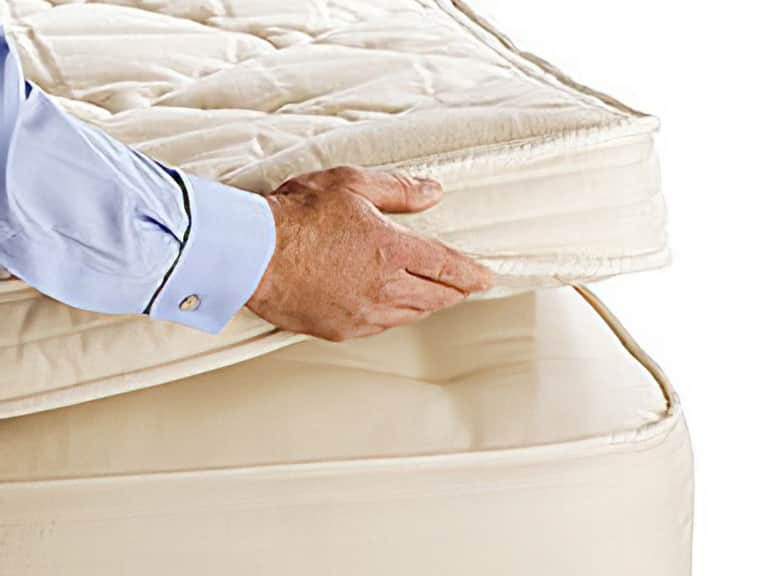
That means no pillows, quilts, comforters, loose blankets, stuffed toys, positioners, or mattress toppers in the infant sleep space. A mattress pad or protector should not be added unless the crib and mattress manufacturers’ instructions specifically allow the particular product and the complete setup remains consistent with current safety guidance. A product marketed as breathable, natural, or protective is not a reason to introduce unapproved layers.
For warmth, dress the baby appropriately for the room and consider wearable sleep clothing designed for that purpose, following its instructions. Avoid overheating and avoid covering the baby’s head during sleep. Families should consult their pediatric clinician or relevant public-health guidance for advice tailored to their circumstances, especially if a baby has particular medical needs.
Nursery design can still be calm and inviting. Color, lighting, wall décor, and storage can create a welcoming room without placing soft objects in the crib. Keeping the sleep surface visually and physically uncluttered is not a compromise in style; it is a deliberate design choice that makes the intended use of the space unmistakable.
How to evaluate materials and claims
Families interested in a health-conscious nursery often look closely at foams, fabrics, finishes, and chemical-related claims. That attention can be useful, provided claims are evaluated specifically. Read the product’s full materials description and identify what the cover, core, waterproof layer, adhesives, and other components are made from. Ask whether the claim applies to the finished product, a particular component, or only a material used in its construction.
Certifications can add information, but they are not all the same. Before treating a label as proof of a particular benefit, find out which organization issued it, what standard it represents, and whether it applies to the product or only certain materials. A certification related to organic textiles, for example, should not automatically be read as a certification of the entire mattress or as a guarantee of a medical outcome. Look for the certificate’s scope and the product model it covers.
Words such as “natural,” “clean,” and “non-toxic” can be broad marketing language. They may indicate a manufacturer’s material choices, but they do not replace a clear specification sheet, compliance information, or safe-use instructions. Compare products on verifiable details: intended age and sleep space, exact dimensions, component materials, care requirements, warranty terms, and the relevant testing or certification documentation.
It is also wise to separate material preference from health promises. A product’s composition may be an important consideration for a household, but a mattress should not be presented as preventing allergies, improving a baby’s health, or guaranteeing better sleep unless reliable evidence supports the particular claim. An evidence-conscious approach makes room for personal priorities without overstating what a product can do.
A careful way to explore Naturepedic
Naturepedic may be one of the brands a family considers while researching a nursery mattress. Treat the company name as a starting point for comparison, not as a substitute for checking the model. Product lines and specifications can change, and similar-sounding products may be designed for different beds or age groups. Confirm the current listing and manufacturer documentation for the exact item under consideration.
For each candidate, look for an explicit statement that it is intended for the relevant crib or other infant sleep product. Then verify the dimensions and any stated compatibility requirements against the crib manual. Review the manufacturer’s recommended care, including what can be washed, whether the cover is removable, and what cleaning products or methods should be avoided. Confirm the current warranty and return terms as well, since they can affect the practical value of a purchase.
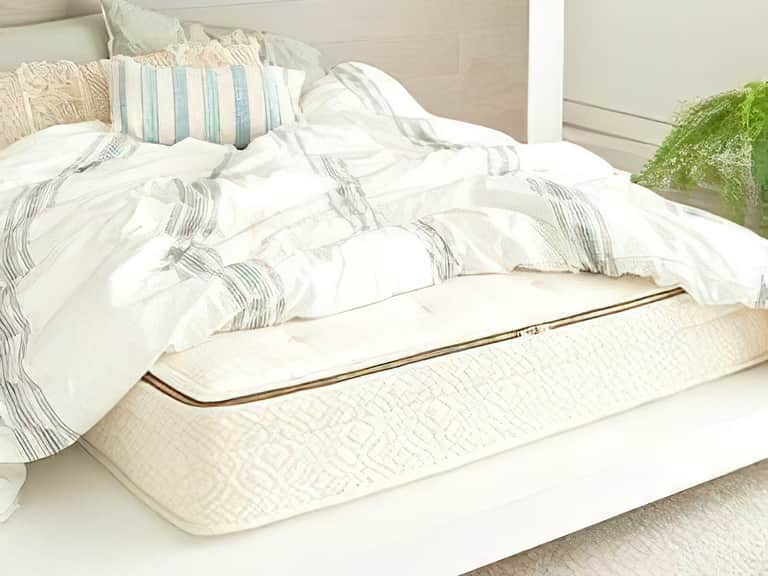
Do not use an adult mattress, topper, or bedding accessory in an infant crib simply because its materials sound appealing. For example, a luxury hybrid mattress made for an adult bed is not a nursery mattress. Nor should a separate comfort layer be added to a crib surface unless both the crib and mattress instructions permit it and the setup remains consistent with current safe-sleep guidance. The intended use of the product is as important as its material list.
Useful questions for a retailer or manufacturer include: What age and sleep space is this model designed for? What are its precise dimensions and thickness? Which crib specifications does it fit? What certifications apply to the finished product, and which apply only to components? How should it be cleaned? Are any protectors or sheets specifically approved? Written answers make it easier to compare options on facts rather than impressions.
Bedding and maintenance: less is usually clearer
Crib bedding has a narrow role. Choose a fitted sheet designed for the mattress size and follow its care label. It should stay securely in place without stretching, bunching, or coming loose. Do not layer sheets or add cushioning to change the feel of the mattress. If a sheet does not fit correctly, replace it with one made for the exact dimensions rather than improvising.
Before the baby arrives, wash bedding according to the fabric and product instructions, using a detergent and cycle appropriate for the material. Avoid assuming that every organic or premium fabric requires special treatment—or that every standard detergent is appropriate for every textile. Manufacturer care labels provide the most reliable guidance. Keep spare fitted sheets available for ordinary changes, but store them outside the crib until needed.
For the mattress itself, follow the maker’s cleaning and drying instructions. Some covers are removable; others should not be taken off. Some surfaces can be spot-cleaned, while others have specific restrictions. Do not use bleach, solvents, steam, or other treatments unless the instructions allow them. Ensure that any cleaned surface is fully dry before use, and do not place an unapproved cover or waterproof layer over it.
Routine checks can help keep the setup in good order. Confirm that the sheet remains fitted, the mattress is correctly positioned, and the crib is assembled as instructed. Revisit the instructions if the mattress is moved, the crib is adjusted, or a product is replaced. Care is not a one-time task at the start of nursery preparation; it is part of maintaining a simple, consistent sleep environment.
Create a room that supports the routine
A nursery sleep setup extends beyond the mattress, but not every element needs to be inside the crib. Keep the area around the sleep space organized so nighttime care can be calm and practical. Place supplies within an adult’s reach but outside the baby’s sleep surface. Secure furniture and follow the safety instructions for room equipment, and keep cords or other hazards away from the crib.
Lighting can be gentle without being elaborate. A dim lamp or a suitable night-light may help caregivers move through nighttime routines, while curtains can help manage daylight if needed. Keep décor and storage from interfering with the crib’s structure or access. The point is not to engineer a perfect room; it is to make safe practices easy to repeat when everyone is tired.
Room temperature, clothing, and the baby’s comfort are worth monitoring, but families should avoid relying on a mattress or fabric claim to solve every environmental concern. Use sensible clothing, follow public-health advice, and seek professional guidance when a baby’s health or temperature regulation raises questions. A well-chosen sleep surface is one component of care, not a replacement for it.
A practical checklist before purchase
Before making a final decision, pause long enough to answer a few concrete questions. This can prevent a premium feature from distracting from a basic mismatch—and can make comparison shopping less stressful.
- Is the product explicitly designed for the baby’s intended crib or sleep space?
- Do its dimensions and thickness match the crib manufacturer’s requirements?
- Is the sleep surface firm, flat, and used according to the current product instructions?
- Are claims about materials and certifications specific, documented, and applicable to this model?
- What are the cleaning, drying, and care instructions for the mattress and cover?
- Does the intended bedding consist only of a correctly fitted sheet, with no unapproved accessories?
- Are warranty, return, and replacement terms clear?
- Have current safe-sleep recommendations been checked rather than inferred from product marketing?
If a detail cannot be confirmed, treat that uncertainty as a reason to ask another question, not as a reason to guess. A trustworthy product decision should be understandable in plain language: what it is for, what it is made of, how it fits, and how it should be used.
Comfort, clarity, and confidence
Planning a health-conscious nursery does not require filling it with specialized products. It requires choosing a sleep surface intended for the baby’s bed, confirming a correct fit, keeping the crib clear, and caring for each component as directed. Materials and certifications can inform the decision, but they belong alongside—not ahead of—compatibility and safe use.
Naturepedic can be part of a family’s research when its nursery-specific options meet those practical tests. Check the exact product rather than relying on the brand name alone, and compare evidence and instructions before deciding. If there is uncertainty about a baby’s sleep needs, ask a pediatric clinician or consult current guidance from recognized public-health authorities.
The most reassuring nursery is not necessarily the one with the longest feature list. It is the one whose essentials are clear: a suitable crib, a correctly fitting mattress, a fitted sheet, and a routine caregivers can follow consistently. That simplicity leaves room for what matters most—care, attention, and a safe place for rest.
Frequently asked questions
Can any Naturepedic mattress be used in a nursery?
No. Check the exact model’s intended use and compatibility. A brand may make products for several kinds of beds, and an adult mattress is not a substitute for a crib mattress. Follow the crib and mattress manufacturers’ instructions.
Should a mattress protector or topper go in the crib?
Do not add one by default. Use only accessories specifically allowed by the crib and mattress manufacturers, and ensure the setup follows current safe-sleep guidance. Keep the infant sleep surface free of loose or unapproved layers.
Do organic materials automatically make a mattress safer?
No single material label establishes that a product is appropriate for a particular crib or guarantees a health benefit. Check the product’s intended use, fit, instructions, and the scope of any certification.
What belongs in the crib for sleep?
Follow current guidance and the crib manufacturer’s instructions. In general, use a firm, flat sleep surface with a correctly fitted sheet, and keep soft objects and loose bedding out of the infant sleep space.